
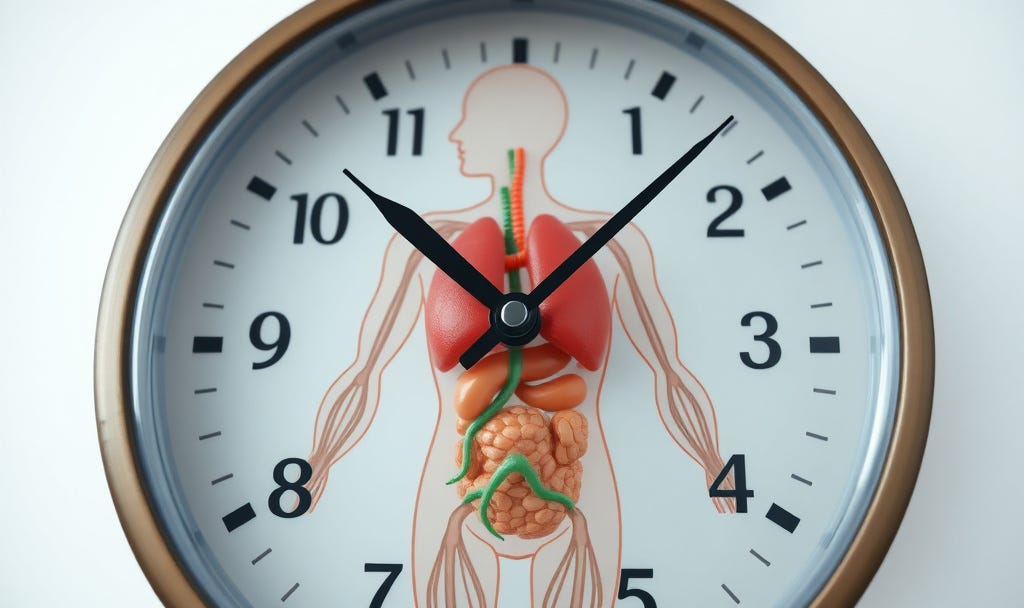
Founders and professionals often think of stress as a feeling.
In physiology, it is not.
Stress is what happens when the biological clock and the work clock drift out of sync.
Your body is a 24-hour operating system.
Every organ runs on a schedule. Every hormone follows a timed release.
Every cognitive peak and emotional dip has a biological reason.
Success becomes costly when the workload ignores the body’s timing mechanisms.
This is your real competitive advantage: not hacks, not supplements,
but aligning your system to the clock that already runs you.
🕰 Why Circadian Physiology Matters to High-Responsibility Professionals
The circadian rhythm is fundamentally a resource-allocation system.
Every hour, your biology determines:
-
how much energy is available
-
which organ gets priority
-
how much cognitive bandwidth you can use
-
when to repair tissues
-
when to regulate emotions
-
when to build hormones
-
when to shift from survival to recovery
Most founders unknowingly run a reversed rhythm:
-
meetings during cognitive dips
-
creative work during low-performance windows
-
conflict in the evening
-
work output during hormonal shutdown
-
overstimulation during recovery phases
-
late-night decisions made on a fatigued frontal cortex
This doesn’t produce “stress.”
It produces mis-timed biology.
Circadian rhythms influence almost every core physiological system; hormones, digestion, immunity, body temperature, cognitive alertness and organ efficiency (Reddy, 2023; Cleveland Clinic, 2024).
Working against this system is like operating high-performance machinery on the wrong fuel cycle.
The 24-Hour Biological Map
A physiologically breakdown of how the body runs itself; not how work culture expects you to operate.
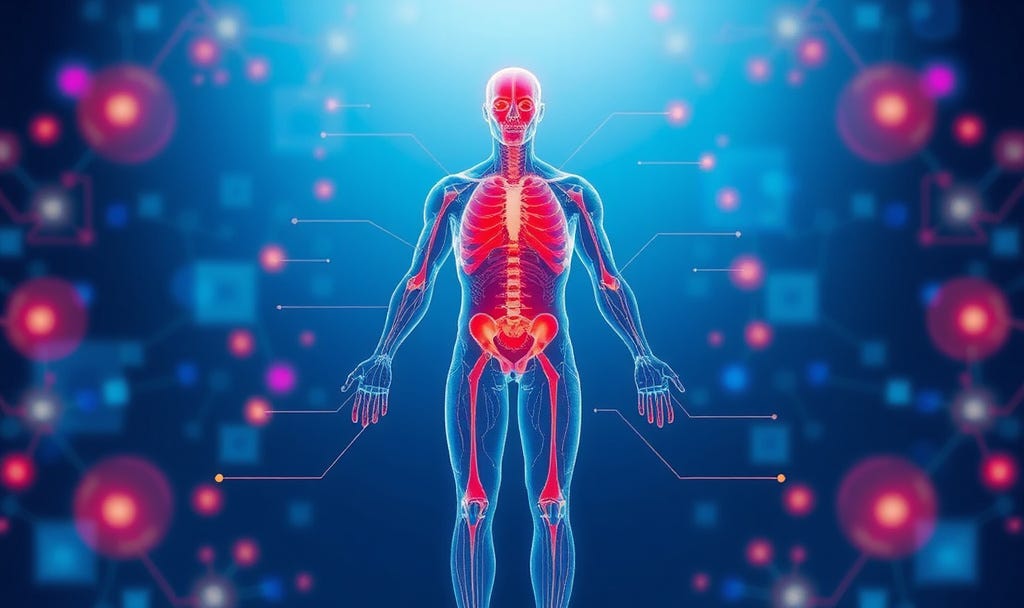
4–6 AM – Colon
Biology: Elimination, glucose rise, parasympathetic peak
Work Insight: Strategic quiet time. Best for reflection, planning, journaling — not screens.
6–8 AM – Stomach
Biology: Strong digestion, cortisol rise
Work Insight: Grounding morning routines. Avoid conflict or decision-heavy conversations.
8–10 AM – Pancreas / Spleen
Biology: Glucose regulation, mental clarity
Work Insight: Peak deep-work window — writing, analysis, focused tasks.
10 AM–12 PM – Heart
Biology: Highest cerebral perfusion, performance peak
Work Insight: Best time for presentations, negotiations, strategic decisions.
11 AM – Testosterone Peak
Biology: Strength, assertiveness, metabolic flexibility
Work Insight: Strong negotiation and high-impact conversation window.
12–2 PM – Small Intestine
Biology: Absorption, slower cognitive agility
Work Insight: Good for admin, check-ins, operational tasks.
Avoid major decisions right after eating.
2–4 PM – Bladder / Afternoon Dip
Biology: Adenosine rise, lowered alertness
Work Insight: Don’t force intensity — this spikes cortisol.
Use this time for review, planning, email closure.
4–6 PM – Kidneys
Biology: Second physical performance peak
Work Insight: Best time for exercise, brainstorming, walking meetings.
Sunset – Estrogen Shift
Biology: Nervous system down-shifts
Work Insight: Emotional bandwidth increases; sensitivity rises.
Not ideal for problem-solving or conflict.
6–8 PM – Emotional Window
Biology: Parasympathetic rising, bonding hormones active
Work Insight: Best for family time, team dinners, decompression.
Working here lowers sleep quality.
8–10 PM – Endocrine Reset
Biology: Melatonin rises; cortisol shuts down
Work Insight: The most important 90 minutes of the night.
Work here → poor sleep → poor glucose stability → poor emotional regulation next day.
Studies show evening work and screen exposure significantly disrupt circadian signalling and lead to metabolic instability, mood imbalance, and poor cognitive recovery (Foster, 2013; Aoyama, 2020).
10 PM–2 AM – Liver
Biology: Detox, metabolic recalibration, tissue repair
Work Insight: Missing this window accelerates inflammation and emotional volatility.
This is the deepest biological maintenance cycle.
Peripheral organs follow their own “clocks,” and late nights cause liver, gut, and metabolic clocks to fall out of sync (Buijs, 2021; Fagiani et al., 2022).
2–4 AM – Lungs
Biology: Emotional processing, lightest sleep
Work Insight: Waking at 3 AM is a biological sign of unresolved stress load, not a psychological problem.

Three Curves That Dictate Your Performance
1. Cortisol Curve
Should peak → stabilise → drop → go ultra-low.
If cortisol stays high at night → your metabolic system destabilises.
2. Autonomic Curve
SNS (sympathetic) in the morning → PNS (parasympathetic) at night.
If the PNS never takes over → chronic sympathetic dominance → burnout.
3. Hormonal Curve
-
Testosterone in the morning
-
Estrogen shift in the evening
-
Melatonin at night
When this curve collapses, so do strategic clarity, emotional stability, energy, and metabolic health.
Hormones are core drivers of tissue timing (Begemann et al., 2025).
What Breaks the Rhythm
-
Late screens / blue-light
-
Irregular meals
-
Evening stress
-
Night-time caffeine or alcohol
-
Working through endocrine reset
-
No morning sunlight exposure
-
Excess context switching
-
Digital overstimulation
Desynchronised clocks are strongly associated with cardiovascular, metabolic, and psychological disorders (de Assis, 2024).
This is not a moral failure.
It is a misaligned biological system.
When Founders Align With Biology, Everything Stabilises
-
Energy
-
Mood
-
Decision quality
-
Emotional regulation
-
Creativity
-
Strategic thinking
-
Metabolism
-
Sleep
-
Hormones
-
Recovery
-
Long-term resilience
This isn’t wellness.
This is operational physiology.
If You Want to Build Better Companies, Start by Running a Better Nervous System
Most founders optimise:
-
calendars
-
workflows
-
task lists
-
productivity hacks
But the real bottleneck is biological.
-
You cannot think strategically when glucose is unstable.
-
You cannot negotiate on a fatigued frontal cortex.
-
You cannot innovate under chronic sympathetic dominance.
-
You cannot build culture when your emotional window is closed.
Work doesn’t require more hours.
It requires better-timed biology.
Life is Biology.
Energy follows rhythm.
And rhythm follows time.
References
-
Reddy S. Physiology, Circadian Rhythm. StatPearls. 2023.
-
Cleveland Clinic. Circadian Rhythm: What It Is, How It Works & What Affects It. 2024.
-
Buijs R.M. The Circadian System: From Clocks to Physiology. 2021.
-
Fagiani F. et al. Molecular Regulations of Circadian Rhythm. 2022.
-
Begemann K. et al. Endocrine Regulation of Circadian Rhythms. 2025.
-
de Assis LVM. Circadian Deregulation and Physiological Impact. Genes & Development. 2024.
-
Aoyama S. Time-of-Day-Dependent Physiological Responses to Meal Timing. 2020.
-
Foster R.G. The Rhythms of Life: What Your Body Clock Means to You. Exp Physiol. 2013.