
Abstract:
This chapter explores how rituals, temples, gurus, and spiritual experiences have been institutionalised into economic systems. From temple donations and pilgrimage circuits to online pujas and guru-led empires, this chapter maps how belief translates into organised revenue.
-
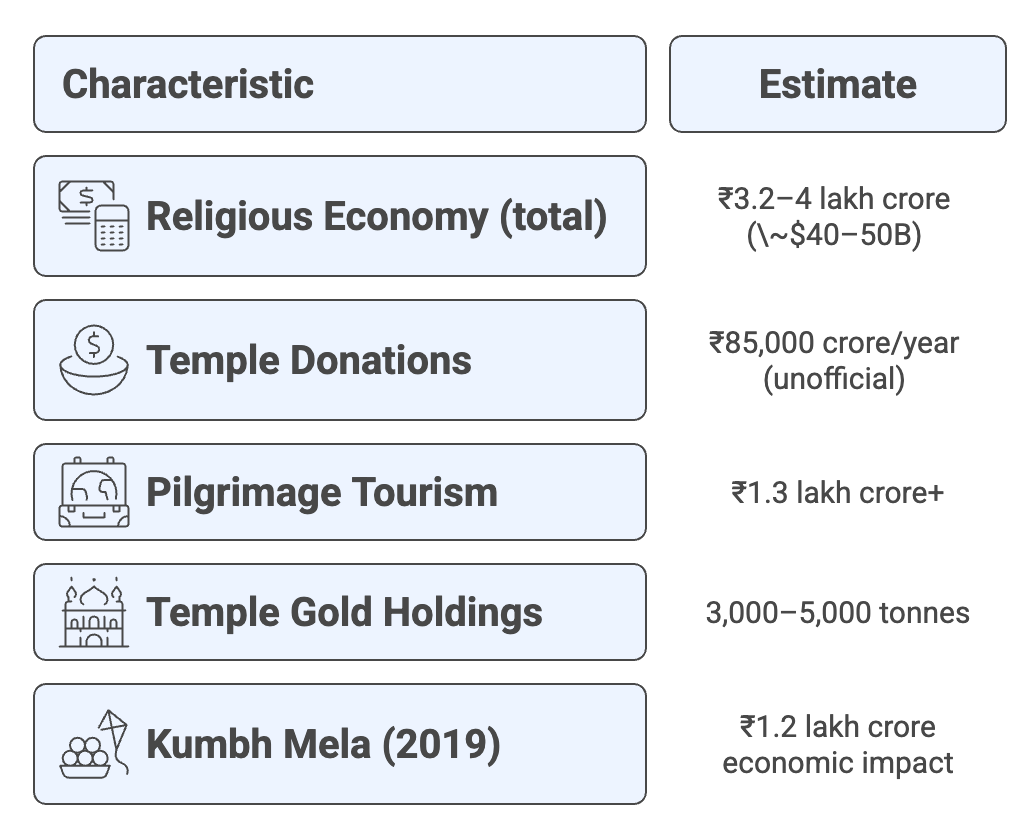
Industry Size: ₹3–4 lakh Cr
-
% of GDP: ~1.2–1.5%
-
People Employed: 70–100 lakh
-
Consumers / Users: 80+ crore
-
Notes: Includes temples, ashrams, festivals, guru networks, online religion tech.
1. The Road to Kedarnath Is Not Just a Pilgrimage. It’s a Business Cycle.

Every summer, as the snow melts and the gates of Kedarnath open, the hills above Dehradun transform. Roads that were quiet in March become choked by May, with buses, ambulances, SUVs, and ponies carrying lakhs of pilgrims chasing salvation, healing, or simply a break from urban fatigue.
For nearly six months, from May to October, faith becomes the primary economy of Uttarakhand. Porters, tent vendors, tea stalls, dhaba owners, mule handlers, mechanics, hoteliers, and priests all rejoin an annual economic ritual.
It’s not a startup. It’s older than capitalism.
But it runs with even greater intensity.
Everyone benefits and everyone suffers.
Traffic jams block ambulances.
Plastic waste clogs glacial streams.
Rates surge, tempers fray, accidents rise.
Still, they come.
With folded hands and open wallets.
This isn’t just devotion.
This is seasonal monetisation of belief,
where tradition meets tourism,
and religion becomes the operating system of an entire region.
2. From Kedarnath to Tirupati: Faith Has Scaled Up
While Kedarnath runs on seasonal belief, other centres operate like full-time conglomerates.
-
Tirumala Tirupati Devasthanams (TTD) earns more annually than many listed companies – over ₹1,500 crore in offerings, plus gold reserves and real estate holdings.
-
Siddhivinayak (Mumbai), Vaishno Devi (Jammu), and Padmanabhaswamy (Kerala) control wealth in land, cash, and centuries-old trusts.
-
Isha Foundation, Art of Living, Patanjali – modern spiritual brands with schools, wellness centres, media arms, and global retreats.
Together, they form a parallel economy: part-spiritual, part-corporate, part-political.
But this isn’t new. India’s religious institutions have long been custodians of wealth, identity, and power.
3. Context & History: When Temples Were the Treasury

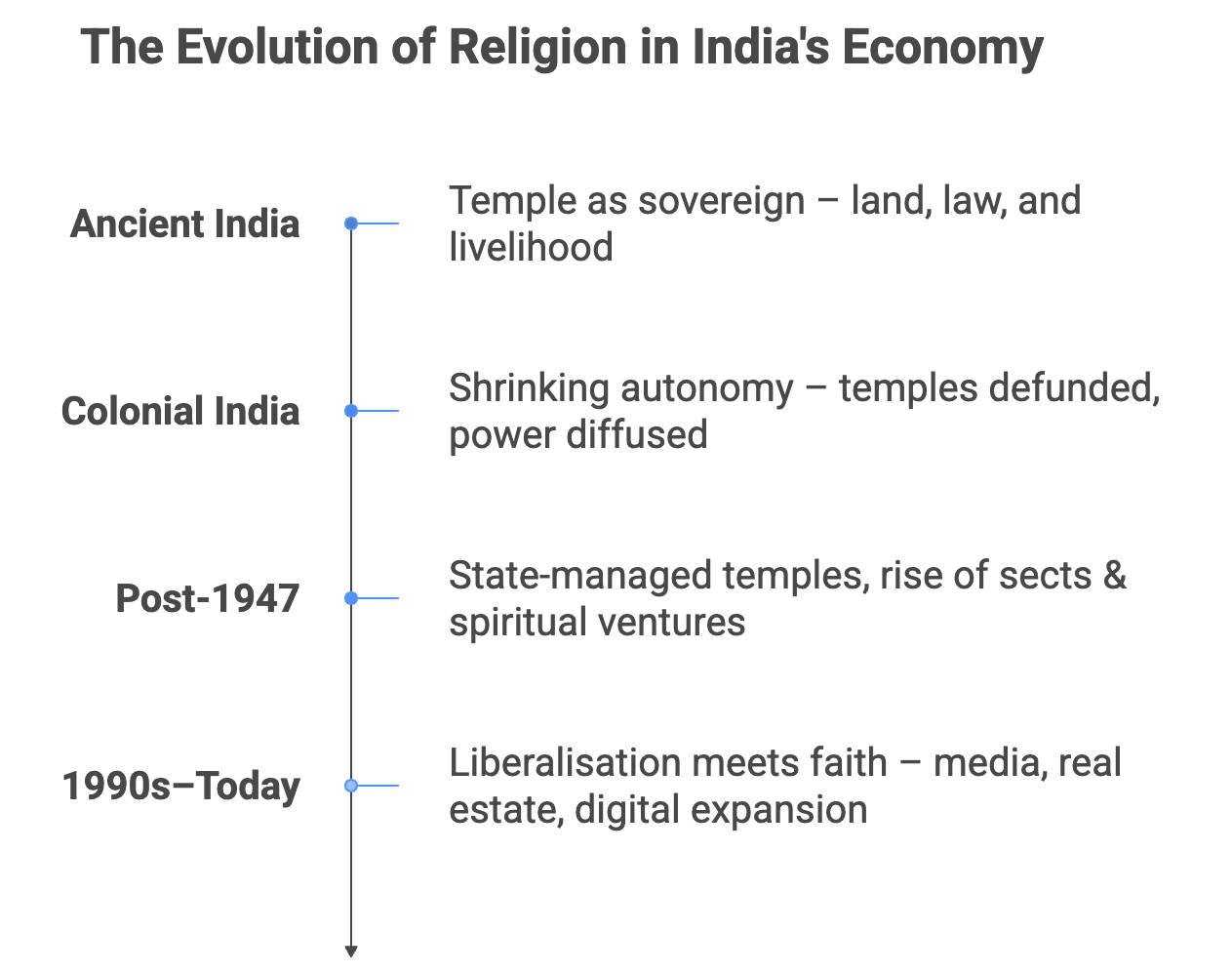
Before banks, governments, or venture capital, temples were the original economic institutions of India.
Under the Cholas, Guptas, and Marathas:
-
Temples acted as schools, granaries, tax offices, and welfare centres.
-
Inscriptions from Brihadeeswara Temple (Thanjavur) record land grants, gold reserves, and job listings.
-
The temple economy was structured, surplus-generating, and deeply embedded in governance.
Colonial rule disrupted this fabric.
The British restructured land rights, taxed autonomously managed temples, and redirected wealth flows to the Empire.
Post-Independence created a bureaucratic paradox:
-
Hindu temples are often state-managed with government-appointed trustees.
-
Churches and mosques operate as independent trusts; a constitutional contradiction rarely addressed.
Simultaneously, new-age spiritual entrepreneurs emerged; mixing charisma with commerce, often bypassing state control.
🔍 Timeline Snapshot: Belief as Economy
4. Business Model Analysis: Faith Has a Revenue Model

Religion in India isn’t just personal. It’s a sector.
From ancient temples to mobile-first gurus,
the belief economy is structured, diversified, and recession-proof.
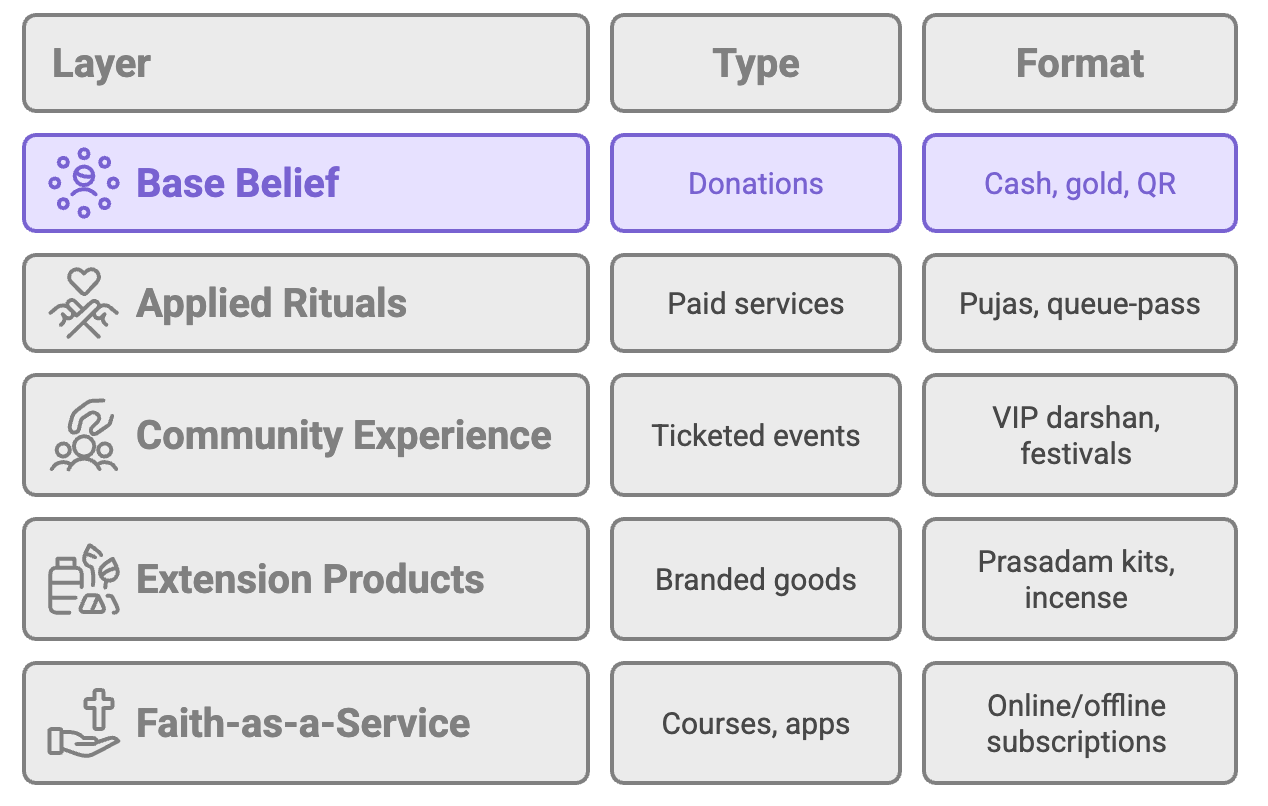
🧱 Core Revenue Streams
-
Donations: Cash, gold, digital QR
-
Pujas & Ritual Services: From ₹51 to ₹5 lakh
-
Festival Spikes: Navratri, Janmashtami, Kumbh Melas
-
Pilgrimage Commerce: Stay, food, queue passes
Rituals become revenue triggers,
resilient and recurring.
🏢 Asset-Driven Income
-
Temple lands leased to vendors and hotels
-
Gold reserves (Tirumala: 10+ tonnes)
-
Urban property holdings (quiet rentals or locked disputes)
-
Fixed deposits and interest income
This isn’t just wealth.
it’s institutional capital that compounds.
🛍 Products & Services
-
Branded goods (incense, prasadam kits)
-
Temple-run schools and Ayurveda centres
-
YouTube superchats, online darshans, retreat courses
-
₹5–10 lakh spiritual “life transformations”
🌐 Digital & Diaspora Reach
-
Paid livestreams and online pujas
-
Spirituality apps with subscriptions
-
Global diaspora events and retreats
India exports gods as reliably as it exports IT services.
📌 Case Snapshots
-
Tirupati: ₹1,500+ crore annually, gold + real estate assets
-
Isha Foundation: Global retreats, branded products, YouTube revenue
-
Vaishno Devi: 8M+ annual visitors powering hospitality chains
🧭 If Religion Were a Startup
📊 Religion in India: Market Snapshot
👥 Employment Impact
-
Informal workers (pandits, vendors): 8~10M
-
Temple staff: 5~7 lakh
-
Pilgrimage-linked jobs: 20M (seasonal)
-
Artisans/craftspeople: 2~3M
📡 Consumer Reach
-
70%+ urban households in monthly rituals
-
90%+ rural participation in temple events
-
NRI donations: $3~5B/year
-
YouTube gurus: 10M+ subscribers
5. The Belief Engine: Manufacturing Meaning, Monetising Uncertainty
No one says, “I will subscribe to religion today.”
But nearly everyone, at some point, submits to it.
Through fear, grief, identity, or guilt.
Religion doesn’t sell a product.
It sells certainty in an uncertain world.
🔁 The Fear–Relief Loop
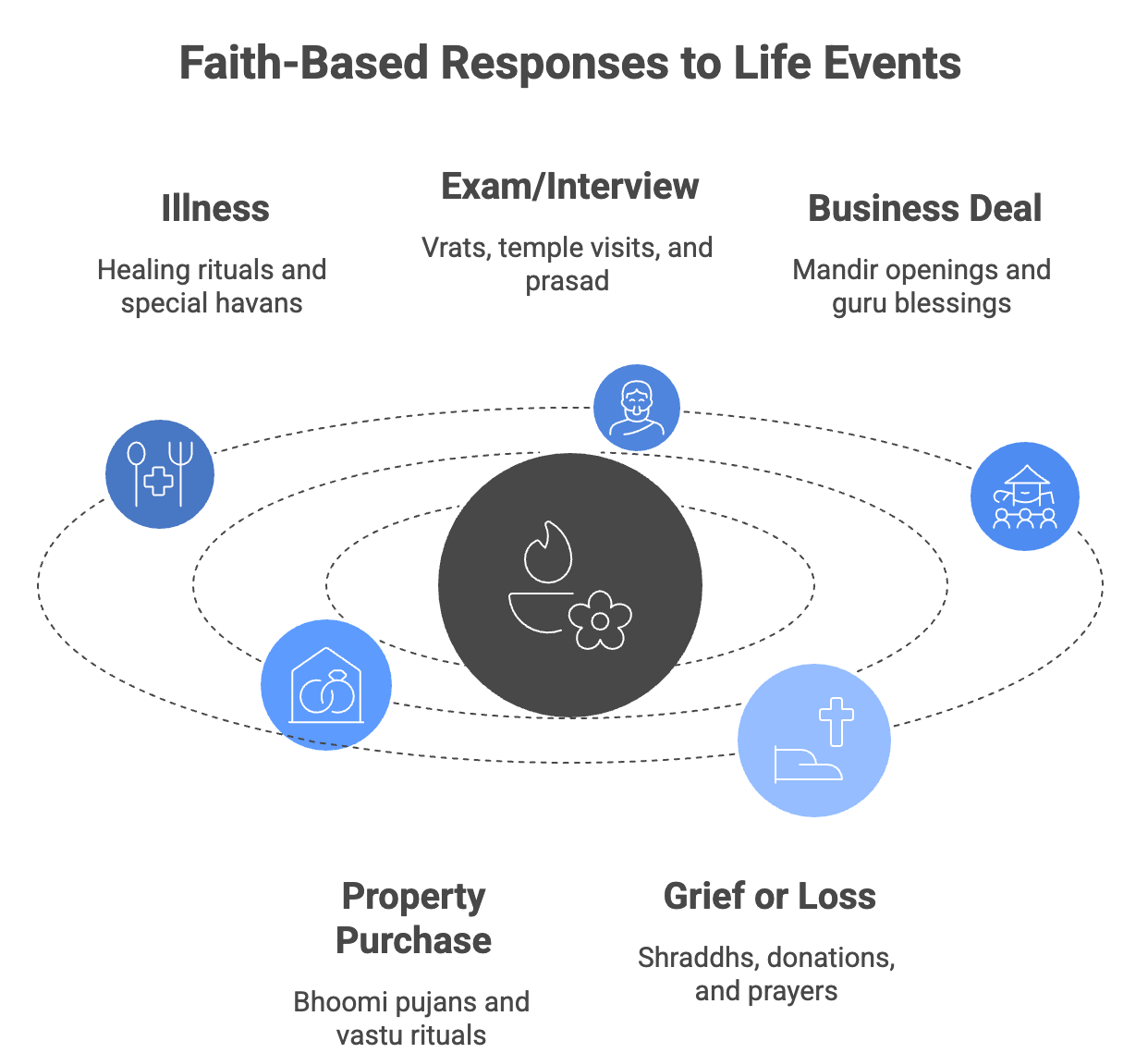
⏳ Ritual = Retention
Daily prayers.
Weekly fasts.
Monthly ceremonies.
Annual pilgrimages.
It’s the original subscription model, time-locked into calendars.
🧠 Identity as Operating System
-
Village: Kuldevi
-
City: Local mandir
-
Diaspora: Temple = homeland
-
Politics: Faith = vote block
🎟 VIP Access: God as a Service
-
₹50 → General darshan
-
₹500 → Quick darshan
-
₹5,000 → Named blessing
-
₹50,000 → Special ritual
-
₹5 lakh → Life-change package
Faith is tiered like software: freemium to premium.
📺 Belief on Broadcast
-
Sadhguru on Reels
-
ISKCON live-streams
-
Astrology apps with paid reports
-
YouTube pujas with QR-linked dakshina
Belief is now algorithmically delivered.
6. Contradictions & Critique: Where Belief Meets Power
The religious economy lives in contradiction: sacred yet commercial, public yet private, emotional yet unregulated.

🏛 Hindu Temples – State-Owned, Politically Managed
-
Over 100K temples are state-run
-
Trustees often political appointees
-
Donations go to govt. boards, rarely publicly audited
-
Churches, mosques, gurdwaras operate independently
⚖️ Unequal Access to Divinity
-
Caste still dictates temple roles and access
-
Women face restrictions (e.g., Sabarimala)
-
Lower-caste workers serve but rarely lead
-
Dalit shrines exist but outside the mainstream economy
🧾 Tax-Free, Loosely Regulated
-
Donations often 80G exempt
-
Land = untaxed, wealth = unaudited
-
“Charitable” trusts run business arms with limited scrutiny
💰 Sanctity Meets Branding
-
Godmen launch product lines
-
Temples host celebrity-endorsed events
-
Pilgrimages are packaged with VIP tiers
7. Closing Reflection: When Belief Becomes Infrastructure
What happens when belief doesn’t just influence life, it structures it?
In India, religion is not just private sentiment. It’s public infrastructure:
-
Temples run schools, kitchens, hospitals, events
-
Godmen influence elections
-
Rituals shape traffic, tourism, policy
-
Vendors rely on shrine footfall, cities reroute around yatras
⚙️ Strategic Implication
Religion is India’s First and Longest-Running Ecosystem
-
Creates emotionally recurring users
-
Operates hyper-locally, scales globally
-
Offers meaning on demand
-
Grows without ads, compounding through inheritance
🧠 Final Thought
You don’t have to believe in religion to recognise its architecture.
Startups mimic user habits. Religions create them.
Brands seek loyalty. Temples inherit it.
Companies chase scale. Gurus achieve it without venture capital.
In India, the business of belief isn’t a niche.
It’s the original model.
And it still works.