

😴 You’re Doing Everything “Right.”
You sleep 7–8 hours.
You track your sleep with a wearable.
You’ve cut caffeine.
You wind down with chamomile.
And yet –
You wake up tired.
You drag through the day.
You yawn mid-conversation.
You feel like you need another weekend inside your sleep.
You don’t have a sleep issue.
You have a recovery failure.
🧠 What’s Actually Happening?
Sleep isn’t passive.
It’s an active recovery process.
But your body only enters deep recovery when your nervous system feels safe.
If your brain is still wired from stress…
If your vagus nerve is underactive…
If your cells are inflamed or overworked…
Then sleep becomes a shut down, not a restoration.
You go horizontal.
But nothing resets.
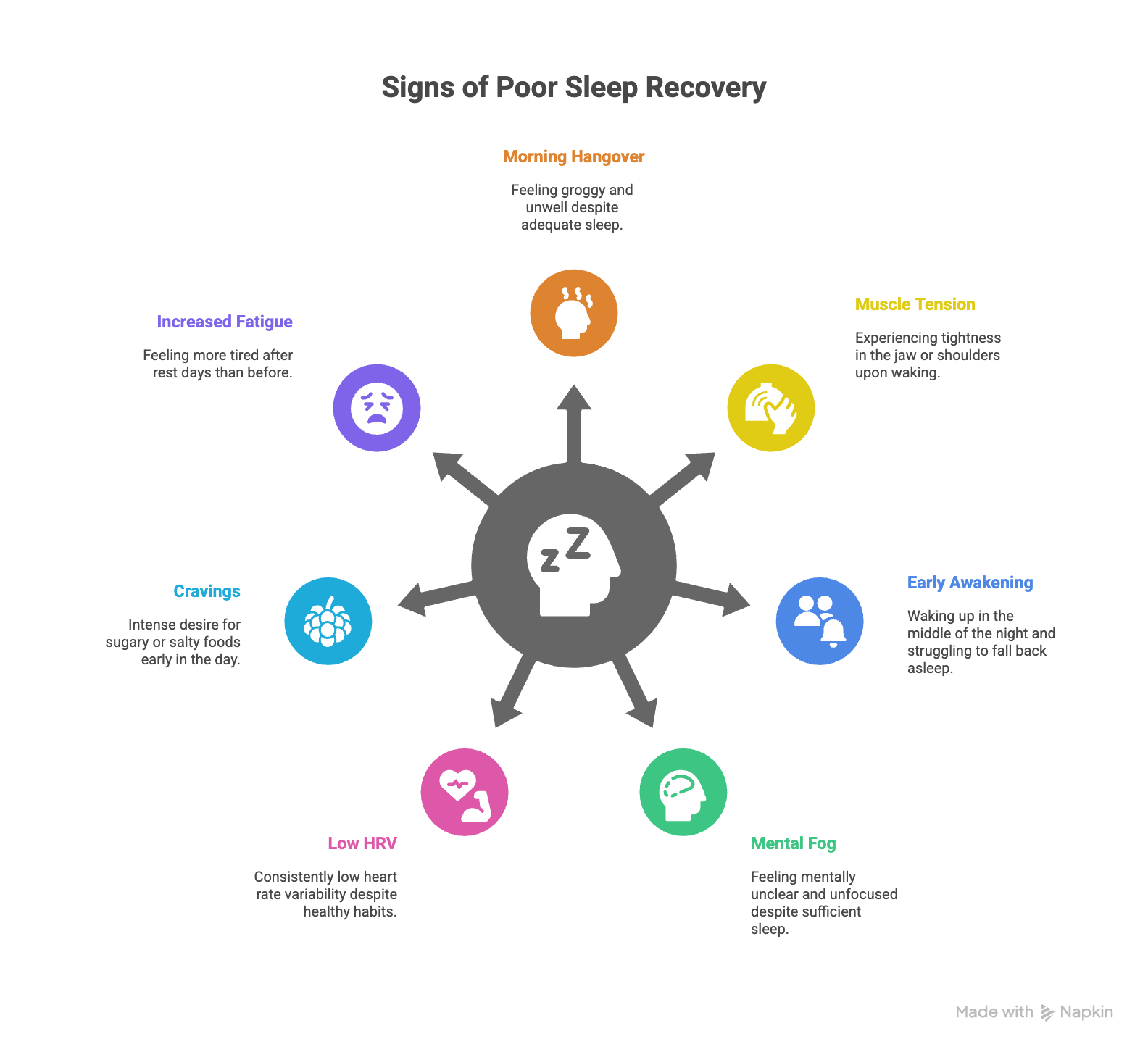
⚠️ Real-Life Symptoms of Recovery Failure
-
You feel hungover even after 8 hours of sleep
-
You have jaw tightness or shoulder tension in the morning
-
You wake up at 3am and can’t fall back asleep
-
You feel foggy despite “clocking 8 hours”
-
Your HRV is low every morning despite good habits
-
You crave sugar or salt early in the day
-
You feel more fatigued after rest days
These are signs your recovery switch isn’t working.
What Lyfas Detects (Even When Your Tracker Can’t)
Lyfas doesn’t just measure how long you slept.
It measures how deeply your system recovered.
Lyfas Markers: What It Tells Us
🔻 RMSSD – Low recovery window → body still inflamed
🔻 Vagal tone – Can’t enter parasympathetic depth during sleep
🔺 LF/HF overnight – Sympathetic dominance during sleep
⚠️ No circadian HRV dip – System never downshifted at night
⚠️ Mitochondrial distress markers – Sleep not translating to energy
🛠️ Recovery Protocol: Rebuilding Night-time Regulation
Your goal isn’t “more sleep.”
It’s more parasympathetic access while sleeping.
2 Hours Before Bed
-
🌙 Stop work + screen exposure
-
🍲 Light, warm, easy-to-digest dinner
-
💧 Herbal tea (chamomile, valerian, tulsi)
-
🧠 Gentle journaling or non-doing activity (no scrolling)
1 Hour Before Bed
-
🕯️ Dim lights, soft instrumental music
-
🛁 Magnesium salt foot soak or warm shower
-
🫁 3–5 minutes of box breathing (4s in, 4s hold, 4s out, 4s hold)
In Bed
-
🛏️ Humming, humming, humming — activates vagus
-
🎧 Listen to slow-paced soundscape
-
🖐️ Gentle body scanning (start from feet → forehead)
-
💤 Let go of the day, without “trying” to fall asleep
🧠 AI PROMPTS TO EXPLORE
-
“How does vagus nerve activation improve sleep quality?”
-
“Why does RMSSD matter more than hours of sleep?”
-
“Design a pre-bed nervous system regulation protocol.”
-
“Explain why low HRV in the morning means poor overnight recovery.”
📚 References
-
Andrew Huberman – Neuroscience of Sleep & Light
-
Stephen Porges – Polyvagal Theory & Rest
-
Lyfas Clinical Research – Sleep-phase vagal tone trends
-
Journal of Sleep Research – HRV and Parasympathetic Recovery
🧩 Final Reflection
You don’t need more hours.
You need more access.
Your nervous system must feel safe enough
for sleep to become recovery, not just shutdown.