Most people don't need a holiday.
They need a reset.
A few quiet days when your body stops rushing, your breath slows down, and your mind begins to listen again.
The Calm Residency is not a wellness escape or a luxury spa. It is a thoughtfully designed experience that combines diagnostics, conversation, and calm practice—so you leave not just rested, but recalibrated.
Listening to your rhythm
Every stay begins with a Lyfas baseline scan (Nadi Pariksha). It reads your pulse and translates it into a map of your body's rhythm.
Seeing that rhythm on screen changes everything. You finally understand what your body has been trying to tell you:
"Here is where I am alert.
Here is where I am exhausted."

Turning data into insight
We sit down for a Life Talk—connecting numbers to real experiences. Maybe late nights are affecting more than sleep. Maybe multitasking keeps you in fight-or-flight.
"Understanding the body's signals is the first step toward self-regulation."
Learning calm through rituals
Small acts. Deep impact.
Morning Tea
Mindfully brewing blends like Blue Clarity supports hydration and gentle alertness.
Evening Reflection
A short journaling practice or quiet tea before sleep reduces cortisol.
Movement
Morning walks and sunlight exposure support circadian balance and mood stability.
The space that breathes
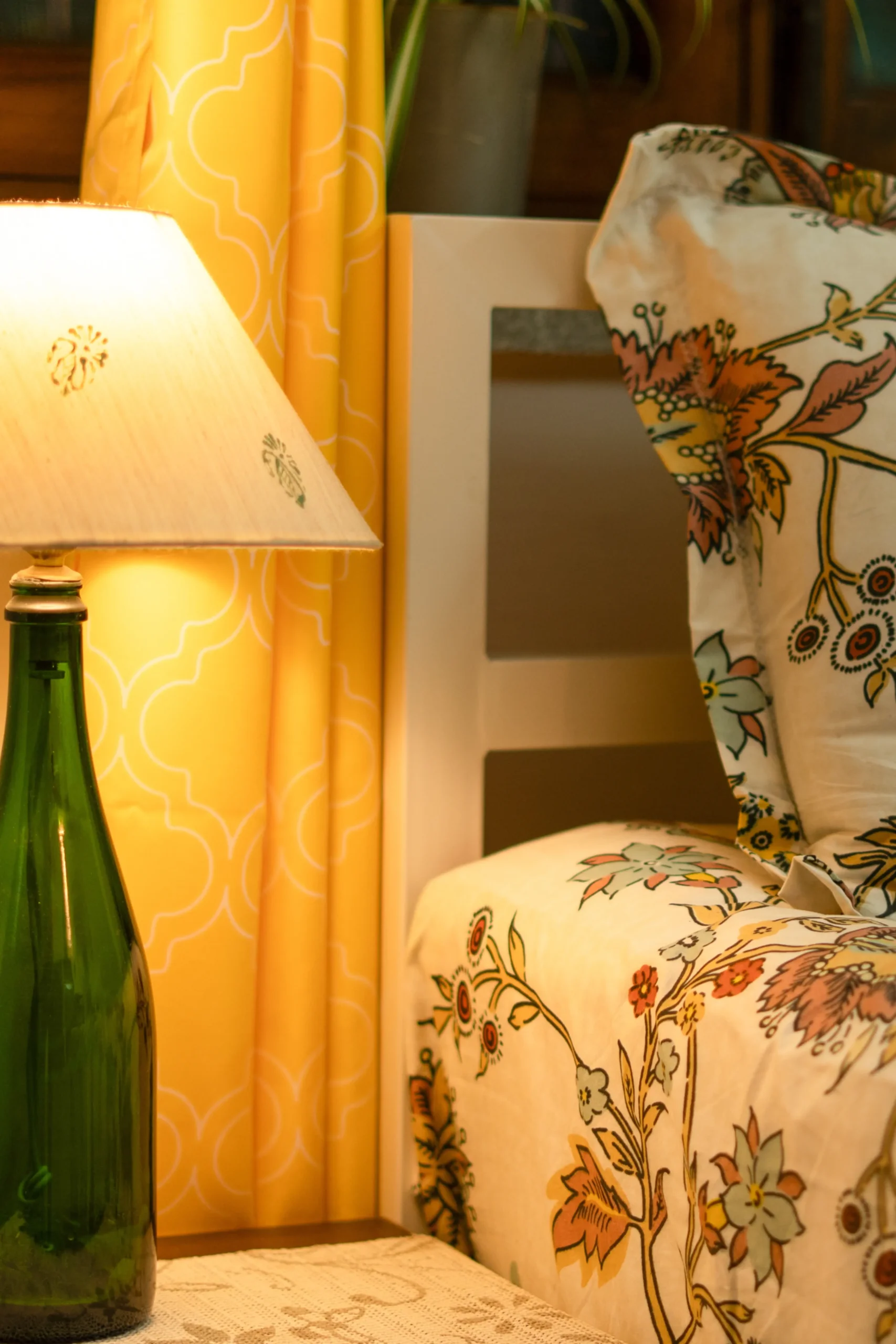
Soft light. Grounded colors. Minimal noise.
Here, design isn't decoration.
It's therapy by atmosphere.
"Guests often say that within a few hours, they start breathing deeper without even noticing."
What changes?
-
Biological Shift
Follow-up scans often show increased HRV flexibility.
-
Mental Clarity
Sleeping deeper. Thinking clearer. Feeling lighter.
-
New Rhythm
You learn how to notice when you drift, and how to bring yourself back.
Who is this for?
For anyone constantly "on" but rarely at ease.
You don't need to be unwell. You just need to be curious.
Begin where you are.
Ten minutes, a cup of tea, and a little honesty. It’s time to find your rhythm again.
Talk to UsLimited slots available for this season
View Scientific References
Porges, S. W. (2011). The Polyvagal Theory. W. W. Norton.
Shaffer, F., & Ginsberg, J. P. (2017). HRV metrics and norms. Frontiers in Public Health.
Tang, Y. Y., et al. (2015). Neuroscience of mindfulness. Nature Reviews Neuroscience.
Foster, R., & Kreitzman, L. (2017). Circadian Rhythms. Oxford University Press.
Ulrich, R. S. et al. (1991). Stress recovery in natural environments. Journal of Environmental Psychology.